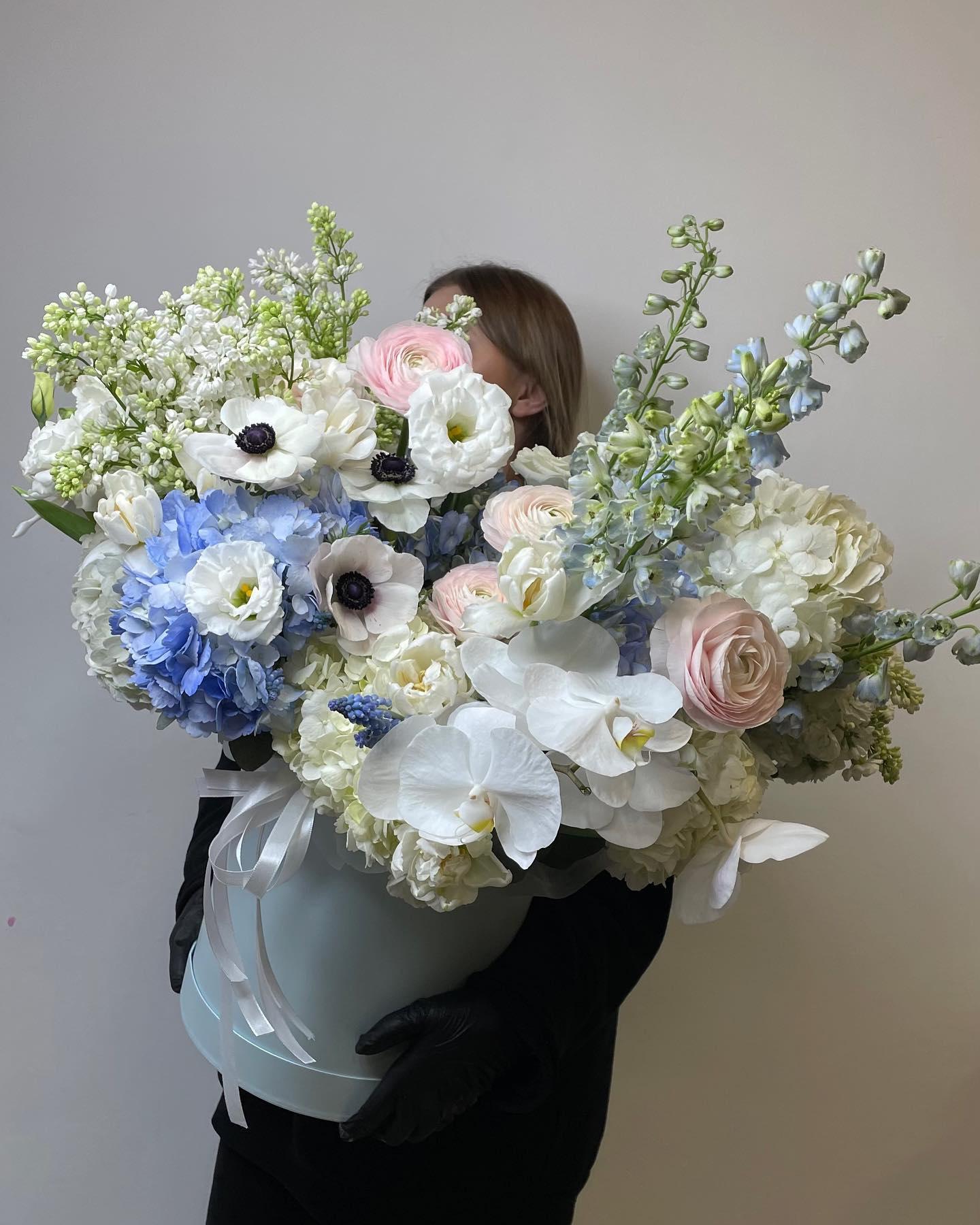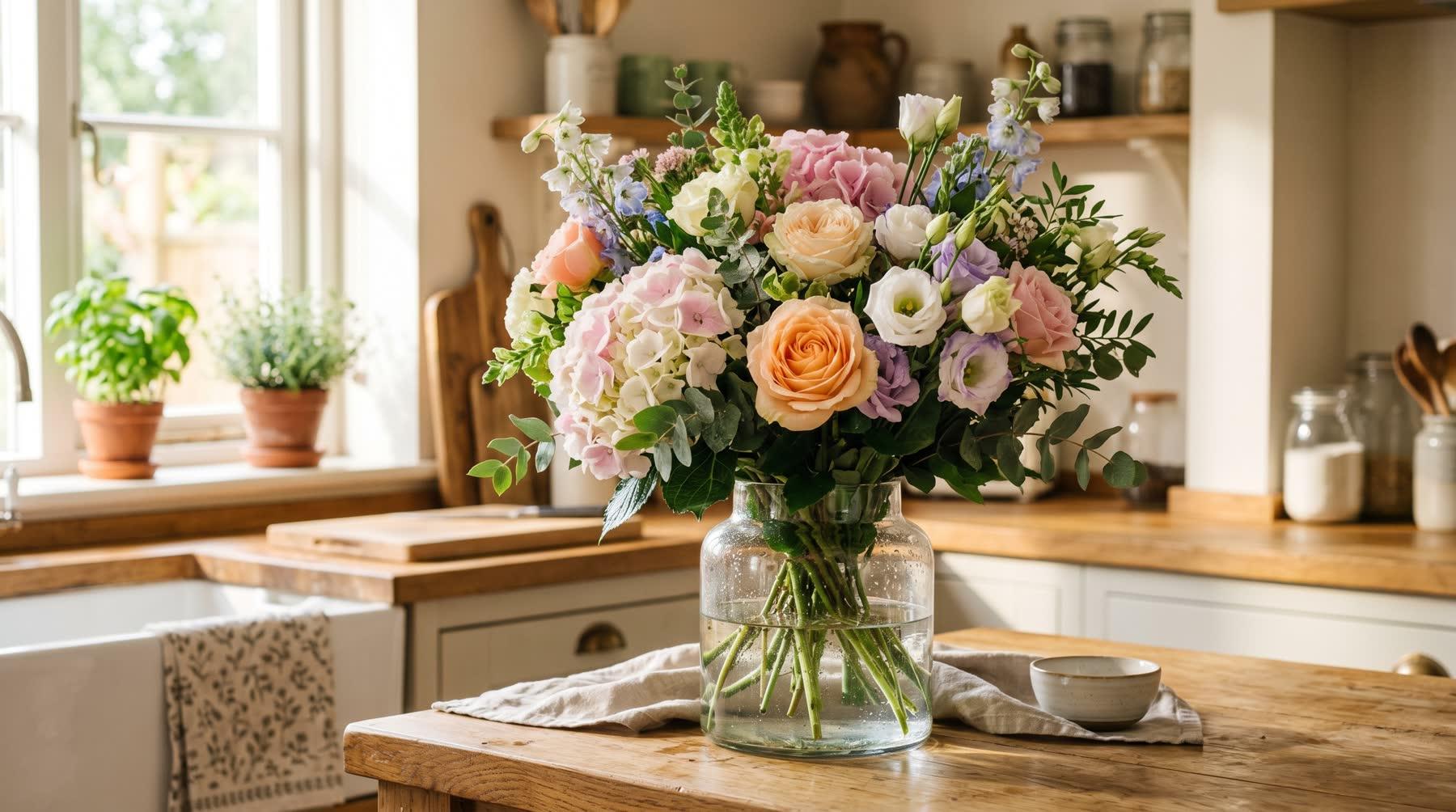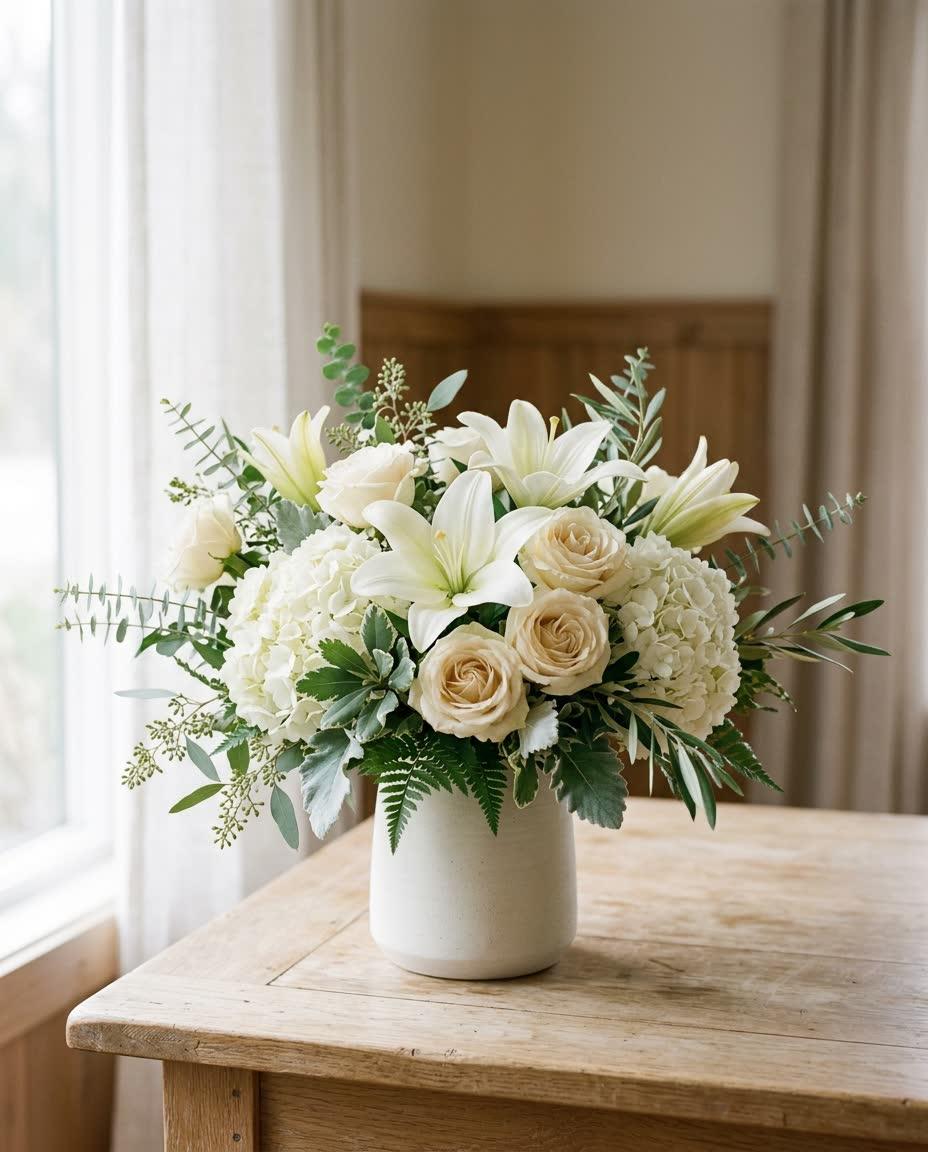
Sending sympathy flowers in Sedalia, MO comes down to three quiet decisions: who you are in relation to the family, where the flowers should go, and when they should arrive. Close family typically sends casket and standing sprays to the funeral home before the service. Friends, coworkers, and business associates usually send a sympathy bouquet, plant, or basket — either to the funeral home during the service window, or to the family's home in the week that follows. Call as early as possible for service timing; we coordinate with local funeral homes and confirm what flowers are available.
Grief is not the time to second-guess yourself. This guide is the same framework our designers use every week when a caller is not sure what to send. It covers arrangement types, color meanings, card wording, timing, religious considerations, and the local delivery logistics that matter when a family is hurting and the details need to be right the first time.
Where Should Sympathy Flowers Be Sent: Funeral Home or Family's Home?
The short answer: send larger display arrangements to the funeral home before the visitation or service, and send smaller bouquets, plants, or baskets to the family's home in the days and weeks after. Both are appropriate. Many people send both — one gesture for the service, a quieter one for the family to come home to.
A few practical notes that shape the decision:
Need flowers in Sedalia?
Tell us the occasion, delivery date, and style you have in mind. We'll help choose seasonal flowers that fit your budget.
- Funeral home deliveries should arrive the morning of the visitation, not during the service itself. Staff need time to arrange the room before family and guests arrive.
- Family home deliveries are often more meaningful in the week after the service, once the initial rush of casseroles and callers has quieted down.
- If you missed the service entirely, a bouquet or plant sent to the home 1 to 3 weeks later tells the family they are still being thought of.
- For Jewish families, flowers are traditionally not sent at all — food, charitable donations, or shiva baskets are the custom (more on this below).
Pro Tip
When in doubt, call the funeral home directly and ask when deliveries are being accepted. Sedalia funeral homes are used to this question and will tell you the exact window. If the obituary names a preferred charity "in lieu of flowers," the family is signaling a preference — honoring that wish is its own kind of tribute.
Who Sends What: A Relationship-Based Guide
Different arrangements carry different meanings, and there is a long-standing tradition about who sends which one. None of it is rigid — these are guidelines, not rules — but they help a grieving family make sense of the room.
- Immediate family (spouse, children, parents) — casket spray. This sits on top of the casket during the service and is traditionally provided by the closest family members.
- Siblings, grandchildren, and close extended family — standing spray, heart wreath, or inside-casket piece. Large, formal arrangements that frame the casket or fill the visitation room.
- Extended family, close friends, and neighbors — sympathy bouquet, basket arrangement, or table spray delivered to the funeral home.
- Coworkers and work teams — a shared floor basket or plant sent from the office, or a medium-sized arrangement with a group card.
- Business associates, clients, and organizations — a dignified standing basket or formal arrangement, typically sent to the funeral home in the business name.
- Distant friends and acquaintances — a small bouquet, potted plant, or sympathy basket sent to the family home in the week after the service.
A Glossary of Funeral Flower Arrangements
Funeral flower terminology can be confusing at exactly the moment nobody wants to be asking questions. Here is what each arrangement type actually means and when to send it.
Casket Spray
A casket spray is the large arrangement that drapes across the top of the closed portion of the casket during the service. This is considered the family flower piece and is almost always provided by the immediate family — spouse, children, or parents. Full-couch sprays cover the entire casket; half-couch sprays are designed for caskets that will be partially open. Typical investment runs $250 to $500 depending on flower selection and size.
Standing Spray
A standing spray is a large, vertical arrangement mounted on an easel, displayed beside the casket or at the front of the service room. Standing sprays typically come from siblings, grandchildren, close family groups, and organizations the deceased belonged to. They often carry a ribbon banner with the sender's relationship ("Beloved Brother," "Our Dear Friend"). Typical investment is $150 to $350.
Wreath
A sympathy wreath is a round, easel-mounted arrangement traditionally symbolizing eternal life and the unbroken circle of memory. Heart-shaped wreaths are a common alternative, especially for spouses. Wreaths are versatile — appropriate from family, close friends, or organizations.
Inside-Casket Piece
Inside-casket pieces are small, tucked arrangements placed inside the casket itself — often a pillow of roses, a satin-backed bouquet, or a small floral cross. These are typically commissioned by immediate family and reflect personal meaning more than public display. Your funeral director will coordinate the timing with the florist.
Sympathy Bouquet
A sympathy bouquet is a traditional vase arrangement sent to either the funeral home or the family's home. These are the workhorse of sympathy florals — appropriate from anyone, at any point, and they carry over from the service to the family's home afterward. Sizes typically range from $55 to $150.
Plants and Dish Gardens
Green plants and dish gardens (a mixed-plant container) are a quiet, enduring alternative to cut flowers. They last months or years, not days, and give the family something living to tend. Peace lilies are the traditional sympathy plant for good reason — they are hardy, symbolic, and appropriate for nearly every household. Typical investment is $45 to $125.
Sympathy Baskets and Garden Baskets
A sympathy basket is a low, wide arrangement in a woven or wicker container — warm, grounded, and less formal than a standing spray. Garden baskets mix cut flowers with live plants. These work well for the family home (they travel home from the service easily) and for coworkers sending a group gift. Typical range is $65 to $175.
Color Meanings: A Short, Respectful Guide
Color in sympathy flowers carries meaning. None of it is strict, and families rarely notice — but thoughtful color choice is one more way to express what words cannot.
- White — purity, peace, reverence, and innocence. The traditional sympathy color, always appropriate. White roses, lilies, and chrysanthemums are the classic choices.
- Pink — gratitude, grace, and admiration. A softer palette often chosen for the loss of a mother, grandmother, or young woman.
- Red — deep love and respect. Red roses are appropriate from a spouse or from someone expressing profound personal loss, though they read as more romantic and are usually avoided for extended-family arrangements.
- Yellow — friendship, warmth, and remembrance. Yellow flowers are appropriate from close friends and coworkers and bring a note of light to somber rooms.
- Purple — dignity, honor, and reverence. Traditional for the loss of an elder or someone of community standing.
- Blue and soft pastels — peace and tranquility. Common in memorial arrangements for infants and children, or where the family has requested a gentler palette.
Pro Tip
If you know the deceased's favorite color, use it. A grieving family almost always finds more comfort in a personal touch than in strict adherence to tradition. One of the most meaningful sympathy arrangements we designed in the last year was bright orange and yellow — the colors of a grandmother's garden she had tended for 50 years.
What to Write on a Sympathy Card
The card matters more than most people realize. It is the thing the family reads, saves, and returns to in the weeks that follow. Keep it short, keep it warm, and make it about them.
Phrasing that tends to land well:
- "With our deepest sympathy to you and your family."
- "Thinking of you during this difficult time. [Name] will be deeply missed."
- "Holding you and your family in our hearts. With love, [Your name]."
- "There are no words. We are here for anything you need — please do not hesitate. [Your name]."
- "[Name] brought so much warmth to everyone who knew him/her. We are heartbroken for you."
- "May your memories of [Name] bring you comfort in the days ahead."
Phrasing to avoid, even when well-meant:
- "Everything happens for a reason" — can feel dismissive of real pain.
- "At least [he/she] lived a long life" or "at least [he/she] is no longer suffering" — any sentence that starts with "at least" minimizes the loss.
- "I know how you feel" — you likely do not, and the family does not need to comfort you back.
- "Let me know if you need anything" — well-intentioned, but it puts the work on them. Offer something specific instead.
- Religious language that does not match the family's beliefs — if you are unsure, secular and warm is safer.
Timing: When Should Sympathy Flowers Arrive?
Timing is where most people get nervous, and it is actually the most forgiving part of the process. There is no wrong window — only different ones.
- Before the visitation — the morning of the visitation, usually 2 to 3 hours before doors open. Funeral home staff need time to set the room.
- Day of the service — acceptable, but ideally delivered in the morning rather than minutes before the service begins.
- Day after the service — a bouquet sent to the family home is a meaningful gesture, often arriving when the house has emptied and the silence is loudest.
- Week after the service — this is quietly one of the most welcome times. The cards have slowed, the casseroles have tapered off, and a fresh arrangement tells the family they are still being held.
- One month later — particularly thoughtful for anniversaries, birthdays, or holidays in the first year of grief.
For weekday services, call as early as possible with the visitation time and funeral home. For Saturday services, Friday afternoon orders are safest. Our shop closes on Sundays, so weekend funeral work should be planned ahead whenever possible.
Pettis County Funeral Homes We Deliver To
Sedalia Flowers delivers sympathy arrangements to every funeral home in Pettis County and across surrounding Johnson, Saline, and Benton counties. Our delivery drivers know the back-door delivery protocols and the family-room drop points at each location, which matters when a service is in less than two hours and the flowers need to arrive without interrupting the family.
Funeral homes we deliver to most frequently in Sedalia and surrounding Pettis County:
- Rea Funeral Chapel — Sedalia
- Heckart Funeral Home — Sedalia
- Campbell-Lewis Funeral Home — Sedalia
- Ewing Funeral Home — Smithton and Sedalia
- Sullivan Funeral Home — Warrensburg
- Additional funeral homes across Marshall, Knob Noster, Green Ridge, and Windsor
If the service is at a funeral home or church not listed here, we still deliver — just provide the venue name and address when you order, and we will route the delivery to arrive before the doors open.
Pro Tip
When ordering for a funeral home delivery, include the full name of the deceased as listed in the obituary — not a nickname. Funeral homes receive multiple flower deliveries per service and route them by the name on the deceased's file. A delivery addressed to "Bob Smith" may get delayed if the funeral home has the service filed under "Robert J. Smith."
Religious and Cultural Considerations
Faith traditions shape how flowers are received at a service. A few broad notes — and when in doubt, a quick call to the funeral home or a close family member is the safest way to honor the family's customs.
- Catholic — flowers are traditional and welcome. Mass cards (a donation for a memorial Mass to be said in the deceased's name) are an especially meaningful addition. Arrangements with crosses, rosaries, or saints are appropriate.
- Protestant Christian — flowers are standard and welcome at both the visitation and the service. Denominational preferences vary, but arrangements sent to funeral homes are broadly appropriate.
- Non-denominational and secular — flowers are always appropriate. A neutral palette (white, cream, soft greens) fits any memorial style.
- Jewish — flowers are traditionally not sent to the funeral or home. The custom is to send a shiva basket of food, make a charitable donation in the deceased's name, or bring a meal during the shiva week. If you are unsure, a phone call to the family or the funeral home will clarify.
- Orthodox Christian — flowers are welcome, though some traditions prefer arrangements without specific pagan-origin flowers (lilies are acceptable and traditional).
- Muslim — flowers are generally not part of Islamic funeral tradition. Charitable donations in the deceased's name are more appropriate. If unsure, ask the family.
- Hindu and Buddhist — traditions vary widely. Garlands of white flowers (jasmine, marigold) are sometimes customary; specific practices depend on region and family tradition.
How to Order Sympathy Flowers for a Sedalia Funeral Service
If you need sympathy flowers delivered today in Sedalia, the fastest route is a phone call to our shop. We can pull up the funeral home's service schedule, confirm delivery windows, walk you through appropriate arrangements at your budget, and have the order on the truck within the hour — all in about 10 minutes of your time.
Ordering checklist — have this handy before you call:
- Full name of the deceased as listed in the obituary
- Funeral home or service venue name
- Service date and time (or visitation, if different)
- Your relationship to the family (helps us recommend the right arrangement type)
- Budget range
- Card message and how you want the card signed
- Your contact information in case the delivery driver needs to confirm anything
For online orders, our sympathy collection lets you pick by arrangement type, palette, and price. For anything unusual — a specific flower the deceased loved, an unusual color request, a very large or custom piece — calling the shop will get you a better result than any online form.
When the Family Has Asked for Donations Instead
Some obituaries include the phrase "in lieu of flowers, donations may be made to..." This is the family's preference, and honoring it is the most thoughtful response. A few families will still appreciate a small, quiet arrangement sent to the home a week after the service — but a donation to the named charity, with a card telling the family you gave in the deceased's memory, is what was asked for.
If you want to do both, a small sympathy bouquet or plant sent to the family home after the service, paired with a note mentioning your donation, is a gesture that almost always lands well.
Final Thoughts
There is no perfect sympathy gesture. There is only the honest one — the flowers you send because you were thinking of someone, the card you write because you wanted the family to know. If you get the arrangement type exactly right, the family will be grateful. If you get it slightly wrong, the family will still be grateful. What matters is that you showed up.
Sedalia Flowers has been designing sympathy arrangements for Pettis County families for decades. When you call, you are talking to people who know the funeral directors by name, know the back hallway at Rea Funeral Chapel, and have delivered flowers to the same families through weddings and funerals both. If you are navigating a loss right now, we are sorry — and we are here whenever you are ready to call.